The installation decision starts with a site, not a checkout page. Before delivery, obtain the manual for the exact model and configuration, show it to the people responsible for the site and document what each party will do. This avoids treating an easy-looking delivery or a general product claim as proof that the system fits a particular room, patio or facility.
Build a site packet
Put the following items in one short packet: final configuration, manual revision, product dimensions, filled-weight information, equipment placement drawing, delivery path, proposed power and water locations, drainage approach and relevant contact names. The packet is a planning record; a qualified installer or local authority may need more detail.
Ice Barrel’s current owner material, for example, tells buyers to choose a level, sturdy surface that can support the filled barrel and to consider access to water, drainage and an outlet when a chiller is used. Those details are specific to that product and still need to be reconciled with the delivered configuration.
Confirm the delivery route
Measure the actual route from truck access to the final location: gates, doors, stairs, turns, elevators, surface changes and the area where a crew can safely set down the equipment. Identify who is responsible if a route requires special handling or cannot accommodate the shipment.
Ask whether the vessel and mechanical equipment arrive together, what packaging is removed, and whether setup is included or merely delivery. Preserve the answer in writing. A product that reaches the property is not necessarily commissioned for use.
Resolve the site questions in writing
- Support surface
- What does the manufacturer require, and who confirms the selected site can support the loaded configuration?
- Power
- What does the exact manual require, and who provides any necessary electrical work?
- Water and drainage
- How will filling, normal draining and an unexpected spill be managed?
- Equipment placement
- What clearance, ventilation, weather and condensation conditions apply?
- Access for service
- Can a technician reach panels, plumbing and the unit after installation?
- Outdoor conditions
- What does the model require for sun, rain, wind and freezing weather?
Do not have a buyer perform electrical, structural or plumbing work from a generic article. Use the manufacturer’s manual, a qualified installer and the relevant local authority for the actual address.
Record the requirements instead of averaging them
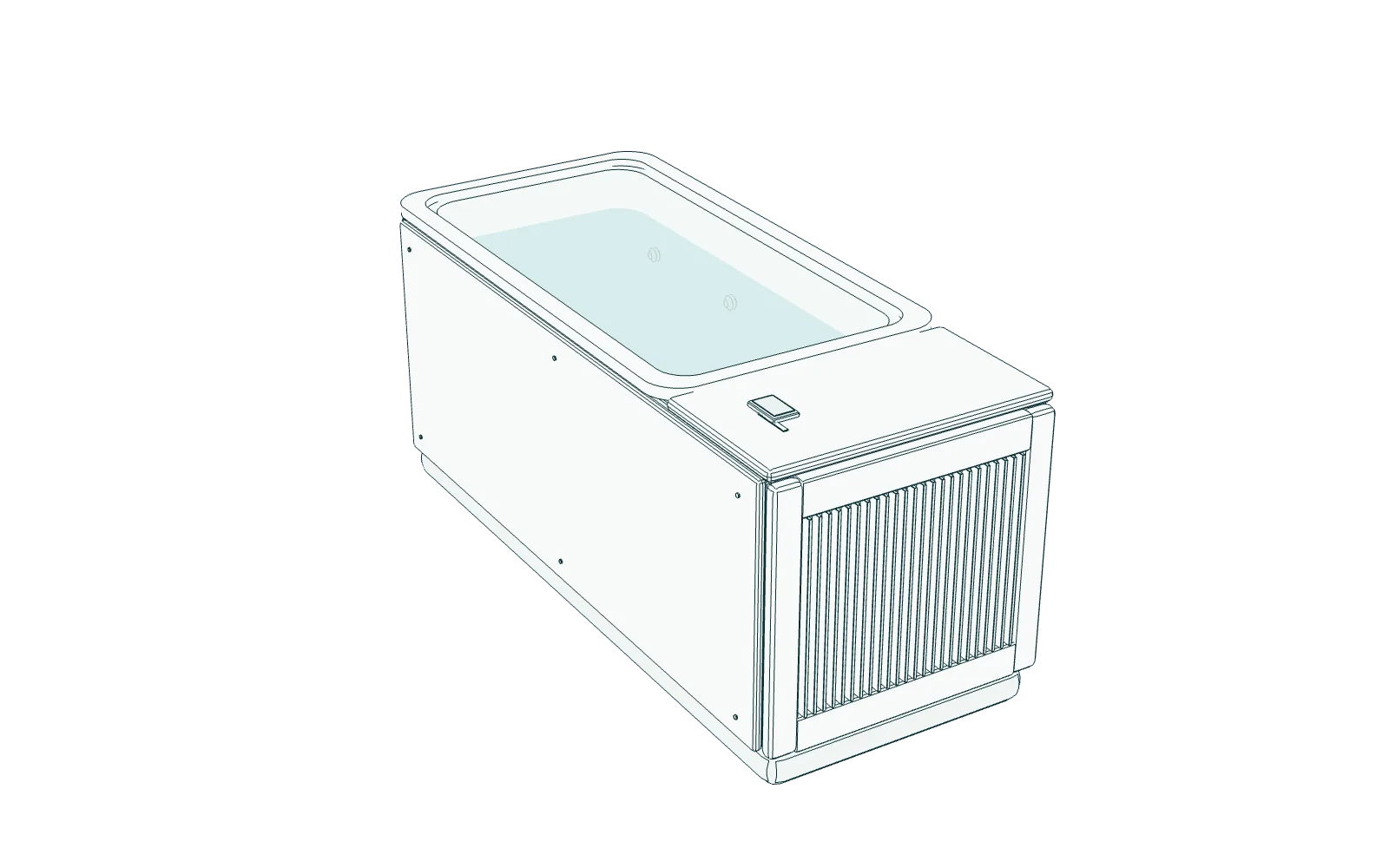
Current manuals use materially different language. BlueCube’s C1 manual calls for a dedicated 120V/20A circuit and 18 inches at its exhaust and filter-access sides. Sun Home’s current Pro manual, Version 4.0, calls for a dedicated, GFCI-protected 120 V, 15 A circuit, 36 inches at the chiller grille end and 24 inches along both long sides; the Version 3.0 manual we read on September 22, 2026 called for an AC outlet, fill and drain access, and 36 inches for airflow and chiller access. Ice Barrel’s chiller instructions call for airflow, drainage and keeping its GFCI module above water. Record the applicable requirements against the selected model; do not average them into a generic electrical or clearance recommendation.
BlueCube owner resources · Sun Home Pro manual, Version 4.0 · Version 3.0 manual · Ice Barrel chiller setup
Treat external equipment as part of the installation
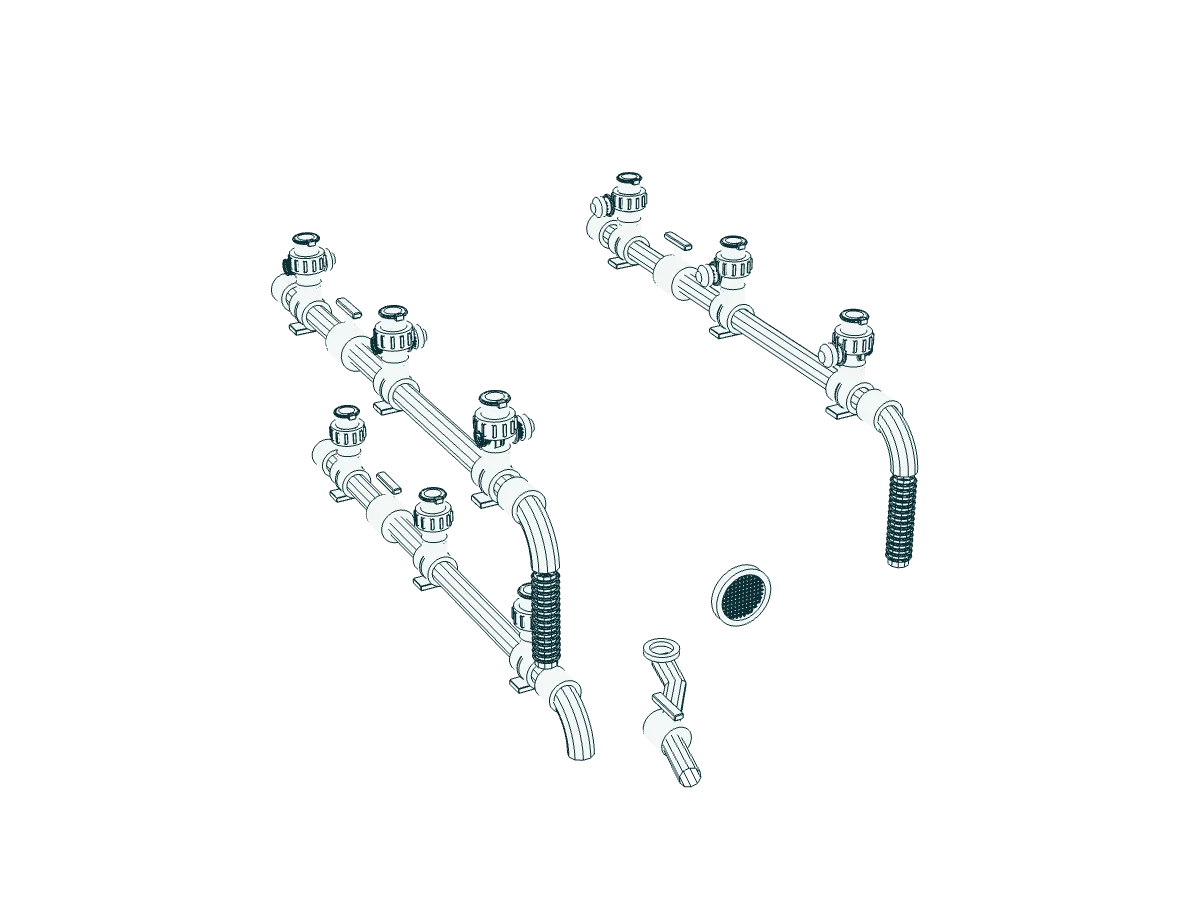
For systems with a separate chiller, trace the complete route between vessel and equipment. Confirm the manufacturer’s current guidance for placement, elevation, tubing, water flow, weather and access. Penguin’s product guidance illustrates how model-specific these details can be: it specifies a gravity-primed arrangement and particular placement guidance for its Cold Therapy Chiller.
Penguin Cold Therapy Chiller product guidance
Do not copy those dimensions or setup steps onto another brand. Ask the seller to identify the governing manual and confirm that the quote includes every required fitting, filter, pump and accessory.
Plan commissioning and first use
Agree on who fills, connects, inspects and demonstrates the system. The handoff should identify the unit, installed components, manual revision, initial observations, treatment equipment, maintenance routine, support route and any work still outstanding. Keep photographs of the installation and copies of invoices privately.
If something differs from the ordered configuration, record it before assuming it is equivalent. Do not rely on a verbal assurance for a substitution that changes service, warranty or maintenance expectations.
Budget for what the quote omits
Separate equipment price from known delivery, site preparation, contractor, accessory and commissioning costs. Mark unresolved items as unknown rather than assigning an invented allowance. The cost-of-ownership tool can organize direct expenses after you have actual quotes.
A well-prepared installation makes the first day less dramatic. More importantly, it creates a clear record of what was installed, under which instructions and by whom.